

This tip is useful when you want accordion rows to show product-specific features, usage instructions, storage guidance, or other details. Text entered directly in the theme editor appears on every product using the same template, so it cannot vary by product.
Copying the same category guidance into each product creates a different problem: every change requires editing multiple products, making missed updates and inconsistent wording more likely.
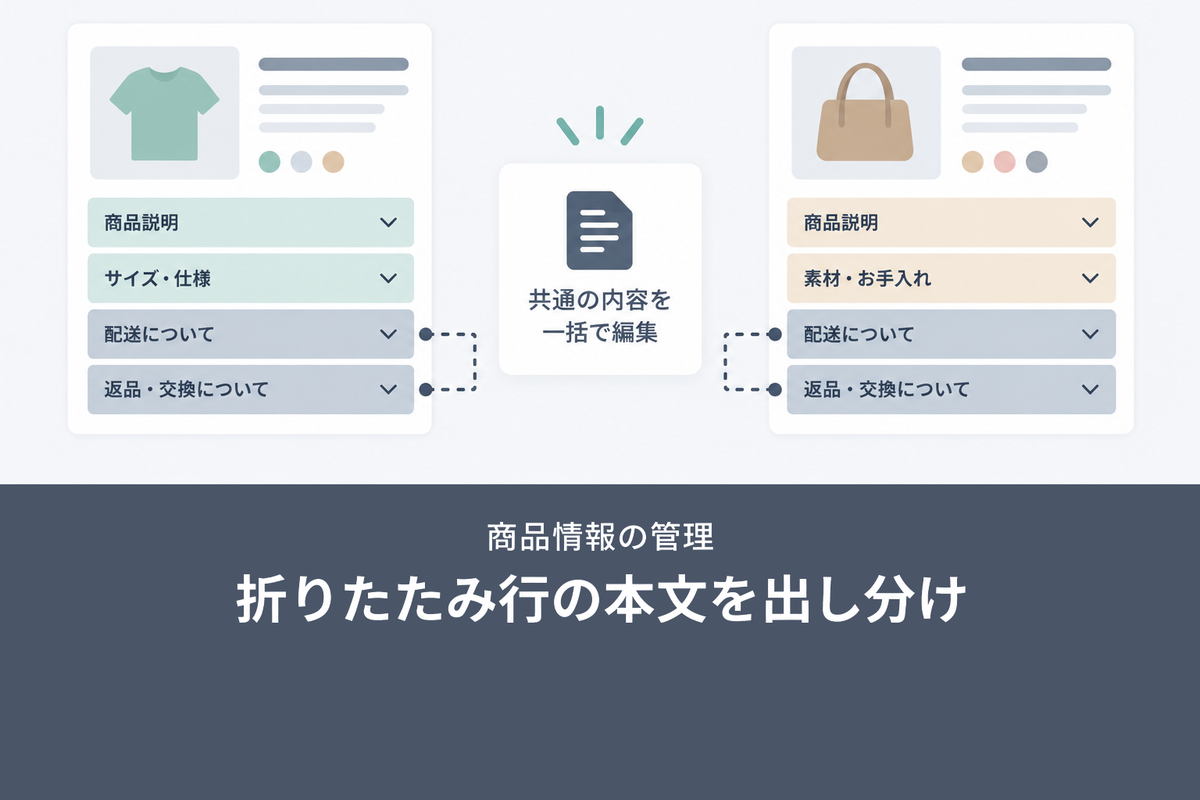
This tip shows how to enter individual descriptions on each product and manage shared guidance in one place. The aim is to organize the information customers need in accordion rows while reducing the work of entering and maintaining it. Choose the setup that fits your content:
- 1. Different text for each product: enter content in a product metafield.
- 2. Shared text managed in one place: reference the same metaobject from multiple products.
Both use rich text. We verified dynamic-source connections and product-page output in a Horizon demo store. No Liquid editing is required.
Finished product page

1. Display different content for each product
Create a product metafield
Go to Settings → Metafields and metaobjects → Products → Add definition.
- Name: 商品別の説明 (Product-specific description)
- Namespace and key: custom.product_description
- Type: Rich text, one value
Pin the definition and save.

Enter content on each product
Open Products → the product → Product metafields → 商品別の説明. Enter the description and save.

Connect it in the theme editor
- Open Online Store → Themes → the theme editor and choose a product template.
- Under Product information → Details, use Add block to add Accordion.
- Add Text inside an Accordion row. Set the row heading to Product guidance, for example.

Clear the default text. Click the database-shaped Connect dynamic source icon on the right, then choose Product (Closest) → 商品別の説明 and save the theme.

Products using the same template now display their own entered descriptions.
2. Manage shared category content in one place
Use this for storage instructions, care guidance, or other content shared by several products.
Create a metaobject definition
Go to Settings → Metafields and metaobjects → Metaobjects → Add definition.
- Name: カテゴリ共通案内 (Shared category guidance)
- Type: category_guide
- Field 1: 名前 (Name), Single line text, key: name
- Field 2: 本文 (Body), Rich text, key: body
Use Name as the display name, enable storefront API access, and save. Enter the English keys manually if Japanese labels leave them blank.

Create the shared entry
Open Content → Metaobjects → カテゴリ共通案内 and add an entry. Enter コーヒー豆 (Coffee beans) as Name and the shared guidance as Body. Use an alphanumeric handle such as coffee-beans. Set the status to Active when available, then save.

Create the product reference metafield
Go to Settings → Metafields and metaobjects → Products → Add definition.
- Name: カテゴリ共通案内 (Shared category guidance)
- Namespace and key: custom.category_guide
- Type: Metaobject, referencing カテゴリ共通案内, one value
Pin the definition and save.

Select the shared entry on each product
On every relevant product, open Product metafields → カテゴリ共通案内, select コーヒー豆, and save.

Connect Body in the theme editor
Add an accordion row as in setup 1 and give it a shared-guidance heading. Open its Text block, clear the default text, and choose Connect dynamic source → Product (Closest) → カテゴリ共通案内 → 本文. Save the theme.

After setup, editing the entry under Content → Metaobjects → カテゴリ共通案内 updates the products that reference it.
Setup notes
- Selecting a Shopify product category does not assign the reference automatically. Select the shared entry on each product during initial setup.
- If you create a dedicated template, assign it in each product’s Theme template field and save.
- Empty content can leave the accordion heading visible.
- These steps were verified in Horizon. Block names and supported connections vary by theme.
Conditional metafield definitions control which product categories a definition applies to. Use the metaobject-reference setup above for centrally managed custom guidance.
Shopify: Referencing metaobject fields through dynamic sources
Shopify: Metafield and input-setting compatibility
Verified September 13, 2026, in Horizon. Body images are demo-store screenshots with identifying details masked and annotations added.


![[MetaSync] Hide Extra Sign-up Form Fields Behind an Expand Button to Reduce Form Friction](http://store-dojo.com/cdn/shop/files/2026-09-08_en.png?v=1788839371&width=533)
